
Nutrition Assessment and Phenotyping Node
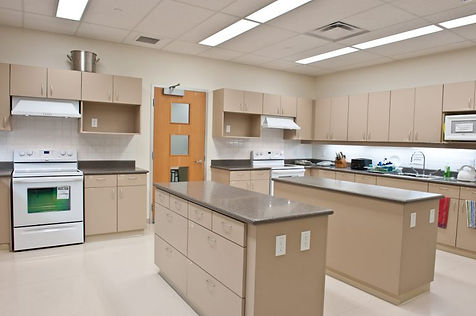
The Nutrition Assessment and Phenotyping Node focuses on precise physiological and functional assessments, including body composition, energy metabolism, and physical function, for both adults and children. It supports Precision Nutrition profiling and evaluates tailored nutritional interventions. The Node includes comprehensive sample processing facilities and integrates the University of Alberta’s Human Nutrition Research Unit (HNRU), featuring an enhanced Metabolic Kitchen for advanced dietary trials and the Nourish Lab: Culinary Kitchen to translate research into practical, real-world applications.
Translational Imaging Sub-Node
The Translational Imaging Sub-Node will introduce Western Canada’s first wide-bore low-field MRI scanner, addressing a critical healthcare gap by accommodating patients up to 700 lbs. This advancement will particularly benefit underserved populations, including individuals with obesity who are unable to undergo standard imaging. MRI will provide whole-body assessments of fat, muscle, and organ mass, advancing research on disease mechanisms affecting the lungs, heart, liver, kidneys, pancreas, and skeletal muscle, and the many distinct pools of fat throughout the body.

Nourish Lab: Culinary Research Clinic
The Nourish Lab: Culinary Kitchen serves as a community hub for education and engagement, promoting the role of diet in preventing and managing chronic diseases. It also advances environmental sustainability by developing novel food products and enhancing nutritional profiles within the Precision Nutrition framework. These efforts focus on sustainable ingredients, innovative technologies, reducing food waste, and promoting resource efficiency, fostering a food system that supports both human health and ecosystem well-being.

Multi-Omics Node
The Multi-Omics Node enables precise molecular profiling of foods and biological systems, including metabolomics, microbiomics, genomics, and proteomics. It identifies individual clusters with shared molecular profiles and responses using AI-driven models from the Data Science Node, forming the basis for personalized diets, food products, and multimodal therapies, such as exercise-based interventions.


Food Science Node
The Food Science Node focuses on developing nutraceuticals and functional foods by leveraging precision fermentation, "green" processing, and multi-omics data. It creates bioactive compounds like probiotics, antioxidants, and specialized proteins to target specific health outcomes while adding value to agricultural by-products. Functional foods tailored to individual molecular profiles or health needs, such as omega-3-enriched foods for heart health or polyphenols for anti-inflammatory support, are developed using advanced techniques like 3D food printing. The Node also addresses population-level health challenges by designing foods with controlled digestion and absorption to improve glycemic control, protein absorption, and overall diet quality without requiring drastic dietary changes.
Data Science Node
The Data Science Node uses bioinformatics, machine learning, and AI to process high-dimensional data from other Nodes. It identifies biomarkers and predictive models for dietary interventions while integrating datasets across Nodes to create a feedback loop. This loop refines molecular insights, drives food science innovation, and enhances Precision Nutrition strategies through continuous iterative testing.
